

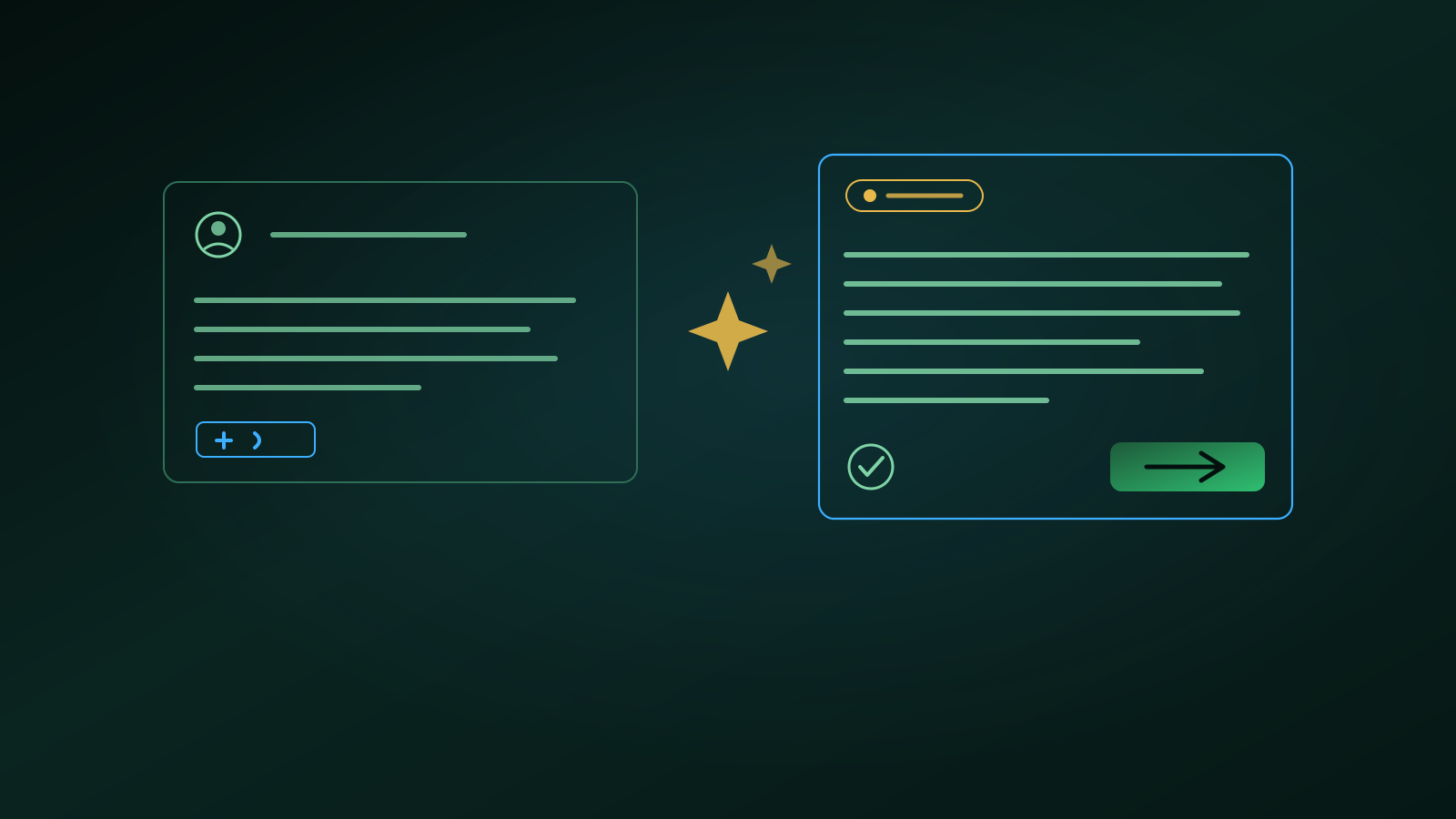
Every incoming customer email already has a draft reply waiting, in the customer's language and with the right data in it. The employee checks and sends.
At many companies, customer email is the biggest silent time eater. Not because the questions are hard, but because there are many of them and they all follow the same pattern: read, look up, phrase, send. Ten minutes per email, dozens of emails per week. In a recent project I turned that pattern around: the email arrives with the reply already attached. As a draft, mind you. That difference matters, so that is where I start.
The rule: AI never sends by itself
Before the technology, first the agreement that governs everything: no email leaves the building without a human having read it and pressed send themselves. The AI writes a draft, nothing more.
That is not caution for the sake of appearances. One wrong answer to a customer costs more than ten good answers bring in. The final check by an employee keeps the quality up and keeps the responsibility where it belongs: with a human.
How it works: the reply is already there
A customer emails a question. The moment the email arrives, the system reads along and prepares a draft reply. When the employee opens the message, the answer is already there.
That draft is not a canned text. It is built from three sources: the customer's question, the earlier email exchange with this customer, and the current business data. If someone asks about availability or prices, the actual dates and amounts are in the draft. If the customer refers to an earlier agreement, the draft knows about it.
And just as important: what is not in the data does not go into the reply. The AI may only use facts. If it cannot answer a question, the draft says so honestly and the question lands with the employee.
In the customer's language
If a German customer writes in German, the draft is ready in German. The employee does not need to speak the language to check whether the answer is right: next to the incoming message sits a translate button, so you read exactly what the customer is asking.
For a company with international customers, a whole barrier disappears. Every customer gets an answer in their own language, without anyone sitting next to the inbox with a dictionary.
What it delivers
The difference is in the minutes. A reply that used to take ten minutes (read, look up, phrase) now takes the time of a check: read, adjust a sentence if needed, send. In practice that is often less than a minute.
Multiply that across dozens of emails per week and time is structurally freed up. But the biggest win is a different one: the customer gets an answer faster, and the answers are consistent. The same question gets the same quality, whether it arrives on Monday morning or Friday afternoon.
Who this is interesting for
This approach fits any company where recurring customer questions arrive by email: about availability, prices, opening hours, orders, appointments. The more predictable the questions, the bigger the win.
And the nice part: you do not have to overhaul your inbox for it. The system works alongside the existing way of working. The employee keeps the same role, only the prep work has already been done.
Read also
- From meeting to task list: how a recording works itself out, another chain that handles itself
- What AI really means for your SMB (without the hype), more practical AI applications
- View all completed projects, web platforms and automation solutions
Bert
Frequently Asked Questions
- Does the AI send replies to customers by itself?
- No, deliberately not. The AI prepares a draft reply, but an employee reads it, adjusts it where needed and presses send themselves. That final check by a human is a fixed rule, not a setting.
- How does the AI know what should go in the reply?
- The draft is built from the customer's question, the earlier email exchange and the current business data, such as availability and prices. The AI makes nothing up: what is not in the data does not go into the reply.
- Does this also work when a customer emails in another language?
- Yes. The draft is written in the customer's language. And the employee has a translate button on the incoming message, so they read exactly what the customer is asking.