

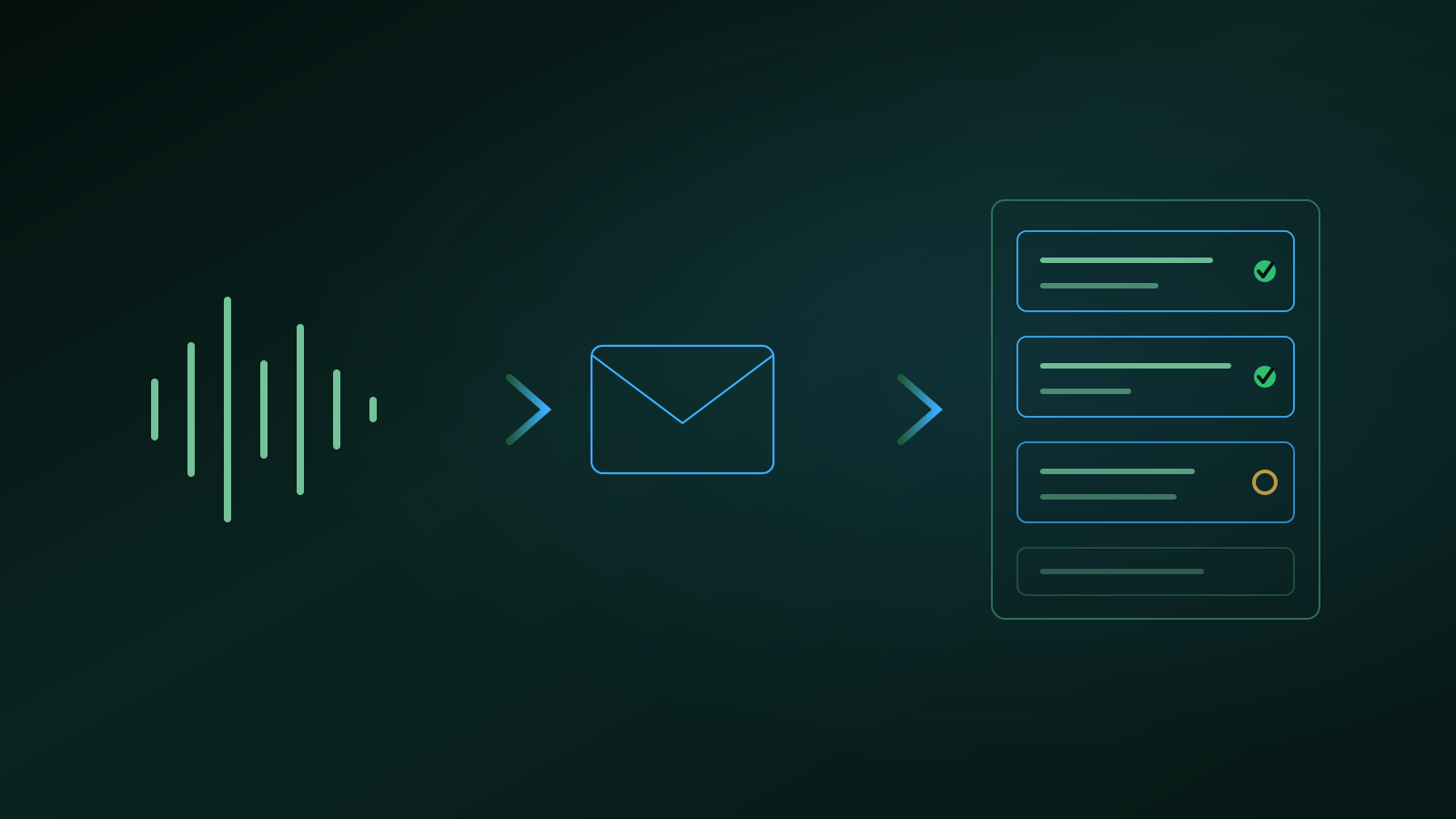
Record a conversation, the summary arrives by email and the agreements are waiting as tasks with the right person. No minutes to type, nothing forgotten.
The best agreements die in minutes nobody reads back. Everyone knows the pattern: a good meeting, clear decisions, and three weeks later the question of who was supposed to do what. The problem is not the conversation, the problem is everything that has to happen after it. That is exactly the chain I recently automated, and the setup is so simple it works for almost any business.
The chain in short
It starts with a recording. A smart voice recorder on the table, or the transcription feature of a meeting tool. Afterwards it produces a summary and emails it to a fixed address.
That is where the system takes over. It reads the email, recognises it as a meeting summary and extracts the agreements: what was decided, who would do what, and when. Every agreement becomes a task on the task board, with a clear description and the source attached, so you can always trace which conversation a task came from.
From that moment on, no minute-taker is needed. There is only a list to be completed.
Tasks land with the right person
A list is only useful if the tasks land somewhere. The system assigns each task to the right employee, based on what was agreed in the conversation. Each task also carries a choice: is this something to pick up now, or something for the next meeting?
That distinction sounds small, but it keeps the board clean. Direct actions sit with the person who executes them. Discussion points collect themselves for the next meeting, instead of buzzing around in between.
Does someone work outside the system, an external party for example? They receive their tasks as a tidy list by email, instead of twenty separate messages.
From agreement to execution
Here is where it gets really interesting. Part of the agreements from a meeting is work for people. But another part is work for the system itself: change that text on the website, prepare that price change, send that group of customers a message.
The system recognises such agreements as automation jobs. The task is then worked out and prepared as an automation assignment: described, prepared and ready to run. All that remains in between is a human pressing approve.
That is how a sentence from a meeting ("the opening hours on the site need changing") becomes an executed change within a day, without anyone having to retype it, forward it or remember it.
The human stays in charge
As with everything I build with AI, the same rule applies here: the system proposes, the human decides. The task list from a conversation is a proposal you review, not a truth that happens to you. A misunderstood agreement gets corrected or thrown away.
In practice that review turns out to be little work. The difference with before is not the perfection of the summary, but what no longer happens: no typing minutes, no copying tasks into another system, no agreements evaporating.
What this delivers
Do the maths for your own business. An hour of meeting often still costs half an hour of writing up and distributing. With this chain that half hour is gone, every meeting again. And more importantly: the agreements actually get executed, because they land in the right place immediately.
Read also
- What AI really means for your SMB (without the hype), more practical AI applications
- RPA or AI? An honest choice for your process, which automation fits where
- View all completed projects, web platforms and automation solutions
Bert
Frequently Asked Questions
- How does a recorded conversation become a task list?
- A smart voice recorder turns the recording into a summary and emails it on. The system reads that email, extracts the agreements that were made and puts each one on the task board as a task, with a description and the right person attached. A human reviews the list before anything becomes final.
- Can such a task also be executed automatically?
- If an agreement is an automation job, for example a change to the website or a recurring action, it is prepared as an automation task. It then sits ready to run, worked out in full, after a human approves it.
- Does this work with existing meeting tools?
- Yes. The chain starts with an email containing a summary. Where that summary comes from does not matter: a voice recorder, a meeting tool with transcription, or a summary someone types and forwards themselves.