

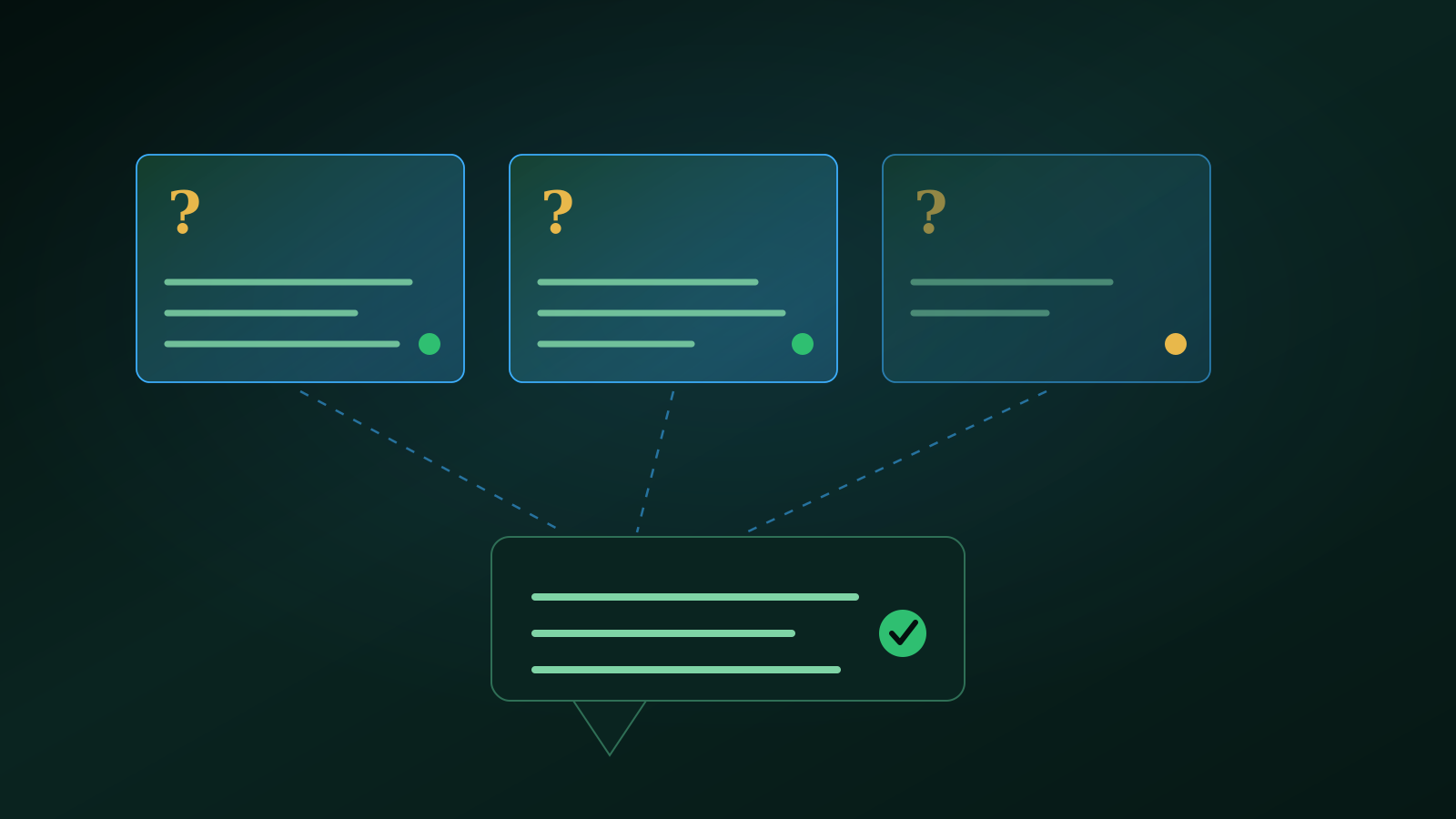
Most FAQ pages are full of questions nobody asks. How to build one that helps customers, and that your AI chat and Google can use directly.
On most websites the FAQ is where the editorial team dumps whatever fits nowhere else. Twenty questions, not one of them ever asked by a real customer. The result is a page nobody reads that saves the support desk exactly zero emails.
It can be done differently, and it pays off more than it did a few years ago. A well-built FAQ serves three audiences at once: the visitor looking for a quick answer, the search engine, and the AI chat on your own site.
The questions do not come out of your head
The first mistake is the source. Most question lists are invented in a meeting room, by people who already know the product. That produces questions like "What makes us unique?" and "What do we stand for?". Those are not questions, that is marketing in question form.
The real questions are already waiting, in four places:
- your inbox: what customers actually ask, in their own words
- the phone: what every conversation seems to start with
- the chat log on your site: where visitors get stuck
- Search Console: which search terms bring people in without a click
One question, one answer, one address
The second mistake is the form. Seventy questions behind an accordion on one long page is not structure, it is an archive. You cannot link to a specific answer, you cannot see which question works, and a search engine sees one page covering seventy subjects at once.
Better: every question is a real page with its own address. That changes several things at once.
You can point straight to the answer from an email or a product page. Your statistics show which question is read a hundred times a month and which one never. And you can improve an answer without first opening a wall of text.
In a recent project I converted 72 separate questions this way. Every answer got its own address per language, its own readability score and its own place in the search results. The overview page stayed, but it is now an index instead of a storage room.
The answer has to be finished
A good answer resolves the question, right there, without the reader having to click on. "Contact us for more information" is not an answer, it is a referral.
Three things make an answer finished:
- The first sentence gives the answer. The explanation comes after it, not before.
- It contains concrete numbers and deadlines. "Usually quick" helps nobody, "within two working days" does.
- It says what the reader can do now, with a link whose text says where it goes.
Why AI needs this
Here is the reason that matters more than it looks.
An AI chat on your website can only answer what it can read somewhere. Put a chat on your site without an ordered source and it fills the gaps itself. Out comes something that sounds plausible and is wrong, and you are the one sending it to your customer. Put an approved FAQ underneath it and it hands back your answer, with the source attached.
The same goes for AI search results and assistants that read the web. They pick up short, self-contained passages where a question and its answer sit together. An accordion holding seventy items is poor material for that. Separate questions with a clear heading are good material.
A technical layer helps here: FAQPage structured data. That is a small block of code alongside the page telling a machine which part is the question and which part is the answer. It sits apart from the styling, and it falls out of the way you stored the questions in the first place. You do not write it, you get it.
Multilingual is not a copy
If your site runs in several languages, a translated FAQ is not the same as a literally converted one. German customers ask different questions than Dutch ones, and they ask them in different words.
Translate the answer, but check the question separately against what comes in for that language. And give every language an address that reads well in that language, because nobody searches for a Dutch file path in German.
What it gets you
A FAQ built this way does three things at once. It catches questions before they reach your inbox. It brings in search traffic on exactly the terms people use when they have a concrete problem. And it is the source your chat, your email drafts and soon your visitors' own AI assistants can draw on.
That last part makes it worth doing even if you have no chat on your site today. The order you create now is exactly the order you will need later.
Read also
- AI draft replies in your inbox: the answer is ready, you press send, where the same answers end up in your email
- What AI really means for your SMB (without the hype), more applications that already work today
- View all completed projects, web platforms and automation solutions
Bert
Frequently Asked Questions
- How many questions belong on a FAQ page?
- There is no ideal number. The test is whether customers actually ask each question. Ten questions taken from your inbox are worth more than sixty invented ones. Start with the ten you answer most often and add one whenever a new question keeps coming back.
- Should every question become its own page?
- For a FAQ that carries weight, yes. With its own address per question you can link straight to it from an email or a product page, your statistics show which questions are actually read, and a search engine judges the question on its own merits. The overview page simply stays in place as an index.
- Why does an AI chat work better with an ordered FAQ?
- An AI chat can only answer what it can read somewhere. Without an approved source it fills the gaps itself, and out comes something that sounds plausible but is wrong. With separate, self-contained question and answer pairs it returns the answer you wrote, and it can name the source.